Showing posts with label life. Show all posts

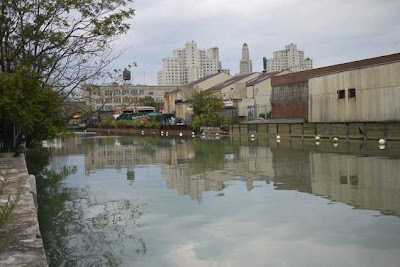
The Gowanus Canal in Brooklyn

The Gowanus canal in Brooklyn is an interesting site of future ecological cleanup and urban development. Like in many other places in Brooklyn you can sense the upcoming getrification and follow the ongoing construction processes. As the Gowanus canal has recently become a superfund site, there is lots of activity going on. For projects and activities along the Gowanus canal see also the site of the Gowanus Canal Community Development Corporation.
This will be the first entry of an exploration into this area. I was cycling there yesterday and got some impression about the urban fabric along the canal between 3rd street and butler street.

Life on the High Line

We had a late afternoon walk on the high line last saturday. Amazing how this place is functioning. The design by 'field operations' with 'diller, scofilio and renfro' was well chosen in the 2003 high line competition.
People apparently love the high line park and fill it with life. I can understand why. This place is made for some basic human desires: to promenade, to view others, to be viewed, to observe and feel the urban fabric on eye-level, to safely look down onto the elsewhere overpowering traffic.
We mounted the high line at 20th street walking southbound all the way to 14th street. The order of the pictures follows this path.

View into the not yet opened second section sceduled to be accessible starting mid 2011.
Promenade, talk, observe.....urbanize yourself along the 'Chelsea grasslands' between 19th and 18th street.

Flooring details are based on the historical railways. Design ready to be read.

Benches flowing from the ground. Pittoresque urban situations arise along the high line due to the mix of levels, the background of the urban fabric, the vegetation and, for sure, the actors on the high line.

The '10th avenue square', a theatrical window into urban traffic flows, to be experienced in (relative) silence.
As a typology, the high line is bringing the skywalk to a new level of higher quality. Please, urban planners worldwide, learn from this example! A longitudinal elevated park can as well be designed as element of new urban developments!

Venice-like situation with streets as canals and post-industrial bridges of sighs.

People watching a fashion show of the NYC fashion week happening in the Standard hotel.

Planting design was done by Piet Oudolf, who nicely blended spontaneous vegetation and prairie species.

Love your city, love your high line park, love each other!

Motivated by Disaster

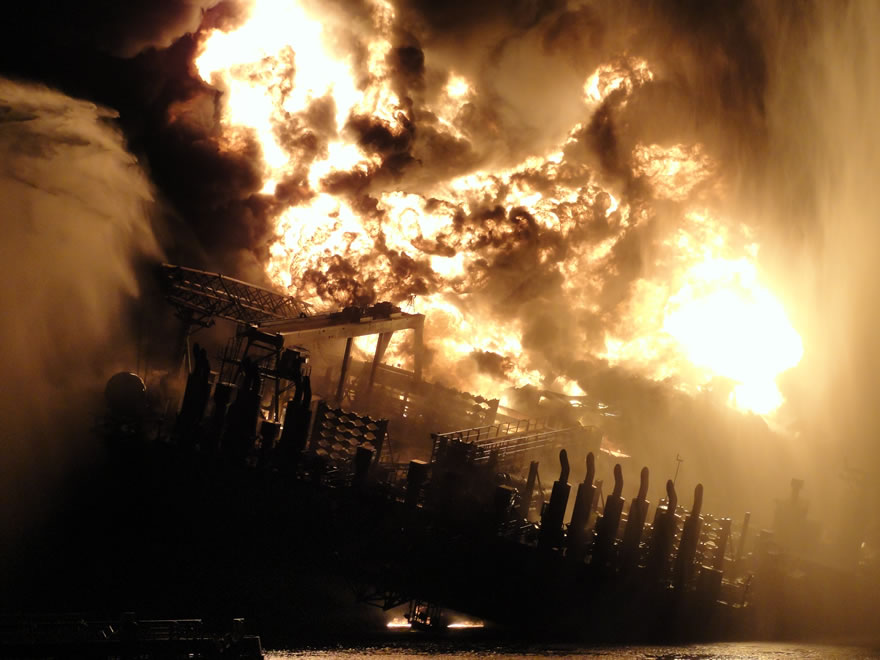
The deepwater horizon rig explosion and following oil spill can be stated to be the greatest environmental disaster in recent years.
Interestingly enough this spill created very strong bottom-up movements to cover the impact of the oil spill by grassroots mapping , crowdsource mapping or by providing an oil spill crisis map.

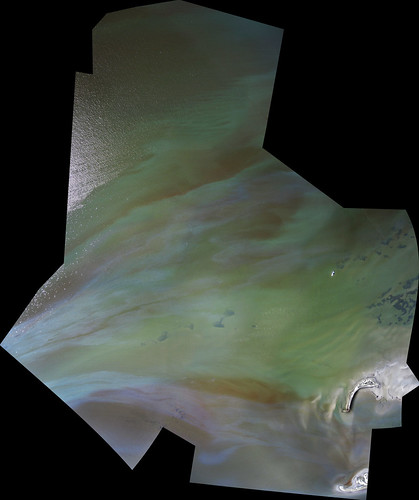
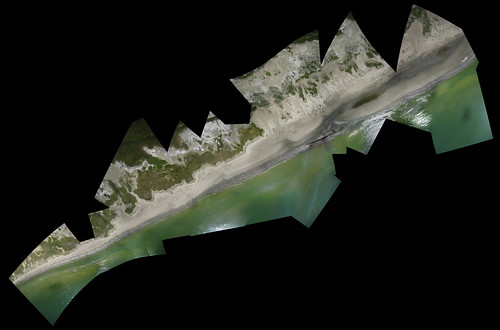
As terrible as the visual material of the oil spill may be. There are as well images, such as the ones below, which transport both, information about the state of the disaster, and, a certain abstract aesthetic. The imaginary below was aquired by gonzoearth with the means of kite-mapping and represent a strong symbol of how networks of individuals can empower themselves to control government and corporations in their promise of mitigating environmental damage.


I've been following press independent coverage and want to provide some important sources of information.

TEDxOilSpill. Comprehensive, in-depth information in TED-talk-style.
I was especially touched by Carl Safina's talk:


NY-Times: Paul Krugman on what didn't prevent the spill.


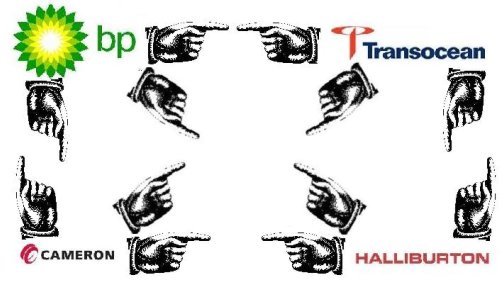
We can't allow oursleves to forget or underestimate the magnitude of this environmental desaster as caused by our contemporary societal-industrial-political system. Namely unregulated corporations and our energy system being trapped in a fossil pathway will have to be adressed to successfully prevent such disasters in future.


It should say 'we' in the center of the above figure, as ultimately we are the ones who buy gas at the pump every day driving our single-cars, using electricity and petrochemical disposable products. It's time for some new paradigms. Sustainable futures are plentiful.