Showing posts with label technology. Show all posts

departure City Hype ideas competition

Last year, departure, the creative agency of the City if Vienna launched a series of ideas competitions to bring forward creative ideas for urban innovation in Vienna and beyond. The 2013 issue of the ideas competition - Cycling Affairs - received more that 200 submissions.

With this year’s ideas competition departure launches a project that provides participants with the opportunity to reflect on what the brief calls a "solidarity city" - City Hype  - invites creative professionals and city enthusiasts to formulate their ideas for coexistence on an equal footing, to provide the city with a multifaceted, modern identity and to actively participate in shaping its future. 


The ideas competition is open for individuals, start-ups or collectives from various disciplines located in Vienna or internationally. The submission of multiple entries is possible. Please find the registration form here


To steer inspiration for first ideas of potential participants the team of departure came up with core areas and specific questions as relevant to the overall theme of the competition. These questions can be taken as points of departure for working on the ideas competition:

THE SOLIDARITY CITY
Which measures focus on justice and solidarity as basic prerequisites for the social interactions of the city dwellers?

THE NETWORKED CITY
How do technologies react to the requirements of a network society, to its high degree of innovative dynamism and advancing digitalization?

THE FLEXIBLE CITY
How can the requirements imposed by the revolution of the working environment be turned into practice and which new models for work, leisure time and life planning are imaginable?

THE OPEN CITY
Where is room for actively participating in the creation of communicative locations and how can we succeed in making the city a modern ‘place of action’ for all its inhabitants?

THE INTELLIGENT CITY
Which sustainable solutions can be developed for the future of a ‘smart city’ in terms of infrastructure, distribution and organization?

THE DETERMINED CITY
What are the tools and strategies required to meet both the needs of individuals and the challenges of the 21st century in a creative way and which lead to personal initiative for the benefit of the civil society? 


The competition's expert jury will be analysing the submitted projects according to the following criteria: 

• Creative quality
• Sustainability
• Potential for change
• Potential for activation
• Added value for the civil society

There are three jury prizes for the competition:  
  1. prize: EUR 7,000
  2. prize: EUR 5,000
  3. prize: EUR 2,500
As well as one "Public’s choice award" which will be awarded by a public vote and which will win € 3,000.

The timeline for the competition is as following:
  • Launch of ideas competition: April 15, 2014
  • Deadline for submissions: June 18, 2014
  • Public voting (for "Public Choice Award"): June 27 – July 20, 2014
  • Jury meeting (For defining three jury prizes.): August 2014
  • Award ceremony: September 2014
Read more about the ideas competition here and fond an English description here

Hacking the Branding of Public Space: The Artvertiser

There is a nice project currently created for hacking the visual representation of open urban space by creating means to sublime the quite intense branding in public open spaces in certain urban centers around the globe. If we consider how important and (pre)dominant billboards and commercial signs have become in defining how our cities look like and with which information our society gets feed and conditioned every day.
Art lover hunting for fresh impressions with the help of The Artvertiser. [copyright The Artvertiser via image source]
The Artvertiser, is 'a software platform for replacing billboard advertisements with art in real-time. It works by teaching computers to 'recognise' individual advertisements so they can be easily replaced with alternative content, like images and video.'  [source]
Funtional diagram of The Artvertiser. [image copyright and source Julian Oliver]
 The project was initiated by Julian Oliver in February 2008 and is now being developed in collaboration with Damian Stewart.
The developers refer to the artvertiser 'as a form of Augmented Reality technology' and consider it to be 'an example of Improved Reality.' [source]

See how The Artvertiser works:

Augmented Billboards 2: The Artvertiser @ Transmediale 2010 from Julian Oliver on Vimeo.

The Artvertiser was released as fully working beta software and has been appearing in Berlin as part of Transmediale 2010, in Brussels for the Europe wide Media Facades Festival and in four inner-city walks during Rotterdam's Image Festival. [source]

Please see Julian Oliver's TEDx talk in which he explains more about The Artvertiser. I will buy the first batch of Artvertiser sunglasses! 

Flickerlab New York

This Friday I was able to visit Flickerlab in new York City which is a media design and production company concerned with 'storytelling for people and planet'.
Still from 'A Brief History of the USA' in 'Bowling for Columbine'. [image courtesy of Flickerlab]

I was attracted by the outstanding philosophy of Flickerlab and my interest in a company working at the cutting edge of latest media technology to create environmentally and socially responsible content for digital media. During my visit I was interested in the Flickerlab working routine (under the aspect of digital craftsmanship); their current projects and future endeavors as well as motivating forces.

Flickerlab is headed by Harold Moss and Tammy Walters which set up the company in 2000 and merged with the Danish animation company Gonzoft in 2009 creating Flickerlab, LLC.
Flickerlab's services include design of interactive media, technology development, media production and content creation. Their clients encompass the BBC, Michael Moore, Hooked on Phonics, Cartoon Network, Comedy Central, Greenpeace, MTV, or, The United Federation of Teachers, amongst others.

Still from animation for Repower America. [image courtesy of Flickerlab]

Still from 'The Wildlife Present: Climate Cartoons' for TV2, Denmark. [image courtesy of Flickerlab]


I was talking to Harold Moss of Flickerlab to find out more about how Flickerlab is supporting environmental and social change on several levels. 
Firstly, Flickerlab is using the medium itself (ebooks, internet, film etc) to create content which is powerful enough to change perspectives in people's minds. Interesting here is the future potential of ebooks which may be an unprecedented opportunity for providing high quality education for mass audiences.
Secondly, in their own practice the company aims to be as sustainable as possible. So when it comes to production, Flickerlab is emphasizing green industry principles and 'cradle to cradle' design with their business partners. In their own office, electricity is entirely coming from New York's renewable share. Moreover, the consumption of hardware and office supplies is dedicated towards a minimal use of resources.
Thirdly, Harold Moss emphasized that it is important to act as a change agent in every aspect of what you're doing, not necessarily only during your work life.
I agree on that: We can't greenwash in our practices and still live a life like the most resource wasteful consumers. It is about working with and cultivating a new understanding.

 Recycled coffee from neighboring Star***** helps the plants in the Flickerlab to grow. 

During our talk I was interested in the importance of craftsmanship in the practice of Flickerlab a question which stemmed from reading Richard Sennett's 'The Craftsman'. Sennett argues that the 'abuse' of digital tools (his example is CAD as used in architectural design) can create a situation of separated hand and head in which the head is suffering in the sense that it is not any more informed by a creative and learning hand.
So how does a digital animation laboratory answer to this challenge? My visit showed that modern tools are going beyond what Sennett described in his book. There is not necessarily a divide between the hand and the head any more. The drawing pads Flickerlab associates are working on are digital drawing boards and screens at the same time. So the head and the hand are connected again. For sure the tactile sense is a different one and you can erase indefinite iterations but this enhanced interface can be seen almost as new form of paper.
 Wacom pen-tablet workstation at Flickerlab. An advanced hands-on digital interface. 

Still from 'St. Joseph's Hospital - Many Roads', drawn completely digital. [image courtesy of Flickerlab]

In this aspect it is as well interesting to state that Flickerlab's 'Go Real-time Animation System' employs the human hand to create animations (such as 'The Nelly Nut Show') in real time with a two-hand game controller (see images below).

An interesting aspect came up during the conversation with Harold Moss. There may be other means than drawing for establishing the creative relationship between head and hand. Inside the Flickerlab are some devices which make that possible. Toys are located on the main meeting table (image) or books used to represent the concepts for ebooks.
Building blocks for new ideas on the Flickerlab meeting table.


We were as well talking about how to maintain a good working environment (something of deep interest for a company concerned with social and environmental change) for successfully producing creative solutions(products). Seen as a workshop, the leaders of any creative work environment (working under the regime of deadlines) have to balance the 'conflict between autonomy and authority' as Richard Sennett put it in 'The Craftsman'. This role of the guiding authority may be in the case of Flickerlab represented by the creative director (Harold Moss). 
For Flickerlab it is firstly important to work with people who bring in their own strong vision and talent (this is not a guide for your cover letter!). They then try to find out what is in the heads and minds of collaborators and associates to leave certain autonomy open. It was noted by Harold Moss that usually some kind of common language is developing with collaborators Flickerlab worked the most with.
So it is important to sensibly cultivate a climate in your workshop in which people feel free to author, not left alone, can be guided, include their skills and surely also credit for their work. I felt that Flickerlab a very attractive workplace as there is a very professional but fair and relaxed atmosphere. 
The Flickerlab couch. A place to have a rest for cultivating creative unrest.


Inspiration for the environmentally and socially conscious practice of Flickerlab stems as well from two books.
'Cradle to Cradle Design: Remaking the Way We Make Things' by William McDonough and Michael Braungart is a book held up by Flickerlab and a frequently gifted present for business partners and friends.
'Blessed Unrest' by Paul Hawken is a book portraying the worldwide movement for social and environmental change. 

Still from 'Tek Jansen' produced for 'The Colbert Report' [image courtesy of Flickerlab]

You can visit Flickerlab's you tube channel for examples of their work. Warning: Including explicitly hilarious material!

I wish the whole team of Flickerlab a very bright and interesting future and the best luck for their upcoming endeavors.

Gravitation Water Vortex Power Plant

The other day I stumbled upon a fascinating small scale hydropower plant - the 'gravitation water vortex plant' - as developed by the Austrian engineer Franz Zotloeterer, who holds the patent for the turbine technology. 
The plant is transforming the mechanical energy produced inside a water vortex and  has great potential for small scale installations. The maximum energy output for this technology is estimated to be about 150 kW at an efficiency of about 70% and a minimum falling height of 0,7 meters.  [source]
 
The main pros of the 'gravitation water vortex plant' are: 
- No regulation system necessary.
- Minor flotsam is able to pass the turbine.
- Fish can pass the plant in both directions.
- The water gets aerated leading to better microbial growth and breakdown of nutrient charge in water. 
- The low falling height allows a better integration into the landscape. 


Because of the above reasons this type of hydro power can be realized in relatively flat landscapes, integrated into river restorations (with synergistic effects) or included in wastewater treatment plants. 
One may as well think about planning small gravitation water vortex power plants as being integrated in urban graywater discharge sewers. There they could create electricity used in pumping rainwater during storm events.
Three types of grid integration are presented on Zotloeterer.com: 
- Parallel operation mode (direct injection into public power grid)
- Surplus energy into grid (energy not used by owner of plant is injected into public power grid) 
- Isolated operation mode (energy is exclusively used by plant owner and stored in other means, eg hot water etc.)

There are several pilot projects in place already which demonstrate the feasibility of this technology.

Obergrafendorf, Austria.
Zotloeterer Inc. installed a pilot 'gravitation water vortex power plant' in Obergrafendorf, Austria, in 2006 . 
The installation cost about 60.000 € and produces about 7,5 kW. 


Schöftland, Switzerland. 
The first gravitation vortex power plant in Switzerland was inaugurated in 2010. The plant produces about 15 kW at an annual production of about 90000 kWh supplying 50 households with electricity.

Mycelia Digested Materials for a Better World

I was very excited today during a TED talk of Eben Bayer, CEO of the company 'ecovative design', who presented ecovative's decomposable materials made with the help from fungi mycelia. Two materials are on the market already, 'ecocradle' for packaging and 'greensulate' for insulation purposes.

 [source]

The process is as smart as it is easy and environmentally benign. A wide array of lignocellulosic feedstock can be fitted into molds where its overgrown by the fungal mycelium which is partly processing the material and gluing it together. It takes five days to produce small packaging elements with a fraction of the energy used to produce a comparable styrofoam element. Ecovative materials are as well a perfect example of the 'craddle-to-craddle' concept as they can be readily composted in your backyard (if available) or centrally after collection. The 'ecovative' business model for global expansion foresees distributed production facilities which each use a local lignocellulosic feedstock.

There are some untold benefits as well. Carbon is stored temporarily in the products and it is easy to imagine how many CDEs can be put into a slower carbon cycle while being used as packaging material. From an urbanistic point of view these materials can be, amongst others, a way to enhance urban soils by decomposing a fraction of the material inflow to cities, thereby saving considerable amounts of primary energy used today for production and disposal of packaging products. The landscape field should be wide opened for these materials as well. There are so many materials used in landscape construction which would actually function in a better way if they became over time a structural component of the soil. hm...lets imagine.

It is good to know that a market-ready product is out there to compete with today's environmentally adverse packaging materials. I wish the team of ecovative all the best in their future development and am curious about more products which can be developed from mycelia-molded lignocellulosic materials. !!!

Electric Mobility in Austria

The Tesla Roadster is the sexy icon of electric mobility.

What is going on in terms of electric mobility in Austria and the CENTROPE region? Several aspects are of interest: initiatives for social integration of e-mobility, technological as well as scientific advances regarding e-mobility, and, policy as well as economic concepts for the advancement and integration of e-mobility .

'Regarding e-mobility, The Mobility House considers first and foremost a modification of human mobility patterns in urban agglomerations as indispensable. The majority of the driven distances are short and can even at this point in time, be easily covered with e-vehicles. As a consecutive step The Mobility House envisions the merging of urban agglomerations and regions as a chance of applying e-mobility supra-regionally.'
from: http://www.mobilityhouse.at/en/electric-mobility/vision.html

'The future belongs to mobility with electric vehicles.' Walther-werke offer a complete kit for charging car and smart grid.

See a video about the future of energy supply in smart grids on the Siemens homepage. A smart grid will be able to balance temporary fluctiations in the availability of renewable energy supply. Smart grids will be an important future infrastructure to allow a diverse and renewable energy generation to power our society in a clean way.

Mobility is more if you are moving with less, like a scooter or a bike, due to lower entropy factors. e-scooters or e-bikes for long distances or rainy and lazy days.

Yet, I still don't see so many e-scooters on the street in vienna.
So get your supplies for example at: scooterman.at webshop

btw., in china e-scooters sales are soaring.


And e-bikes in Vienna:
As resident of vienna you can get 30% (max of 300€) back from the cities subsidy. 'Antragsformular für mein Elektrofahrrad'


Image showing Viennas city counselor Ulli Sima on a tesla-like electric bike. :)


E-mobility in Graz: The Magna 'BionX' is frequently represented in Austria. Magnas BionX motor is a future bestseller of this company.
photo: Stadt Graz / Foto Fischer

Nonwithstanding, walking and biking - mechanical forms of mobility (m-mobility) - are still the most efficient in keeping our environments alive.

LiJiang, Yunnan, China

air car news!


humanitarian application of an air engine:


Angelo Di Pietro: 
"There is no other motor as good as ours, years of research and analysing other motors around the world gave me the confidence and obligation to say so. Obligation in the sense that people have been waiting for ages in relation to efficiency in order to take care of our environmental situation." 

taylor glacier bacterial community

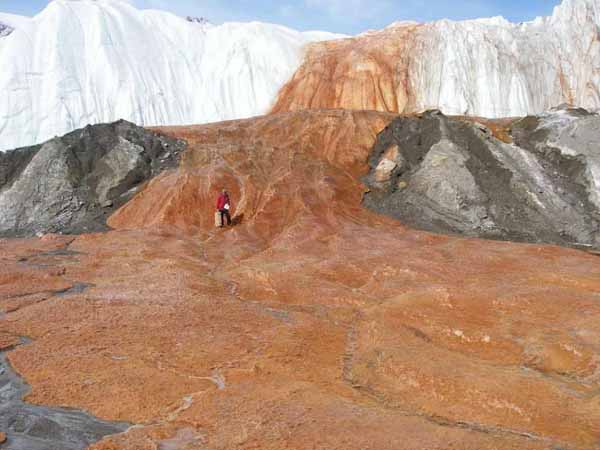
'Ihren - sehr niedrigen - Energiebedarf deckt die Lebensgemeinschaft wahrscheinlich aus Restbeständen von organischen Kohlenstoffverbindungen unter Zuhilfenahme des einzigartigen Schwefel-Eisen-Kreislaufs. Licht und Sauerstoff werden nicht benötigt.' [derStandard.at]


pic from: http://www.crystalinks.com/antarcticamicrobes409a.jpg

the taylor glacier bacterial community (which you see as red outflow in the above picture) will be visited by:

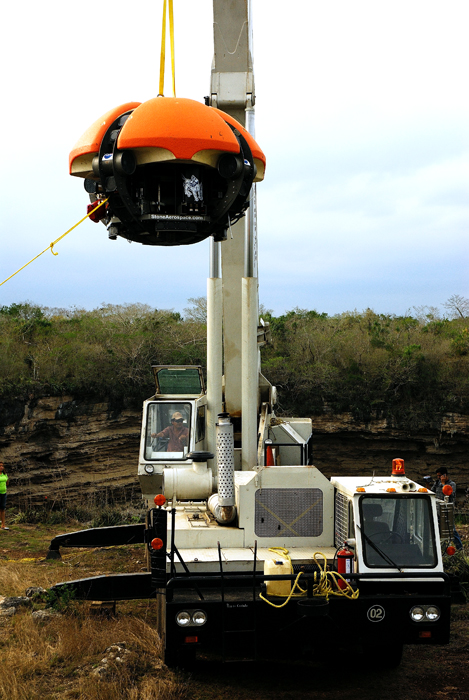
ENDURANCE - an 'Environmentally Non-Disturbing Under-ice Robotic Antartic Explorer'


check aerticles:

in 'science' and in 'applied and environmental microbiology' about this endeavour.


playing zII/edition


This is a version of herwig weisers zgodlocator. Play the dead informations' leftovers!